
← Blog · 20 July 2026
Tasmanian Solar Outlook Shifts with July 1 Price Rises, New Feed-in Tariffs, and National Grid Changes
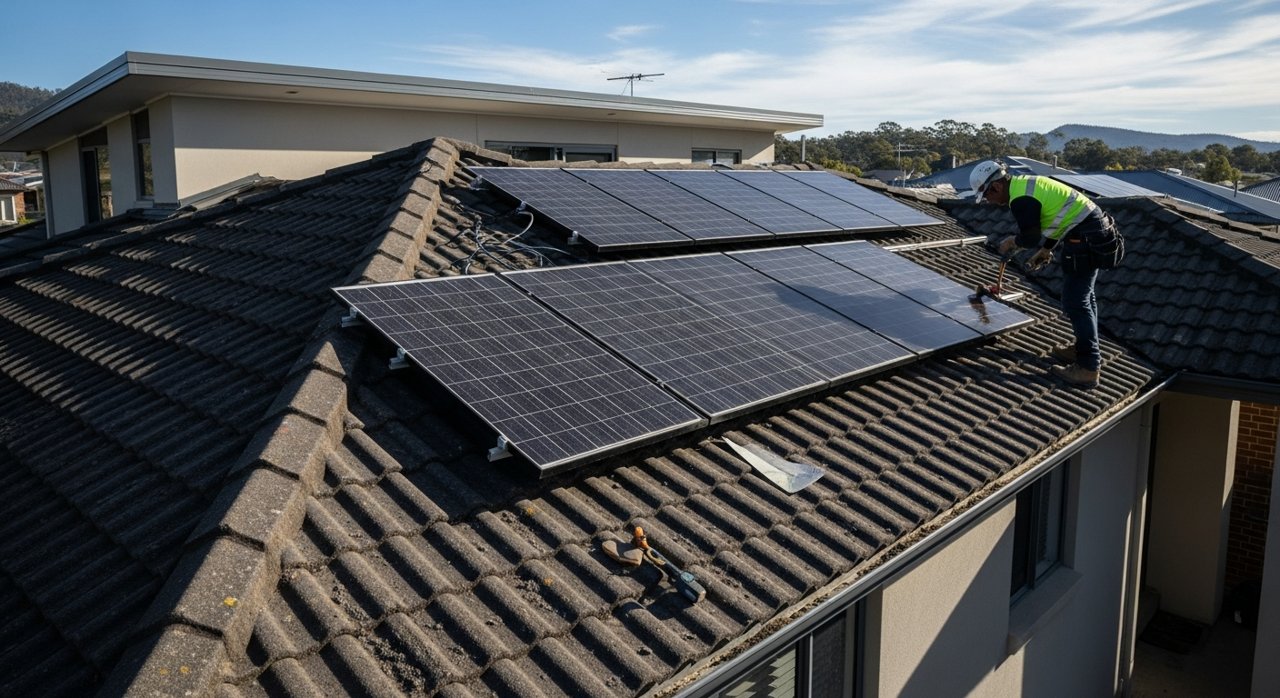
A series of regulatory and market shifts in late June and early July 2026 have altered the financial landscape for solar power in Tasmania. Key changes include an increase in both standard electricity prices and the solar feed-in tariff, ongoing impacts from federal battery rebate adjustments, and a fundamental change to how Tasmania’s energy market interacts with the mainland. These developments directly affect the calculations for any homeowner considering installing solar panels and batteries.
Regulated Price and Solar Tariff Changes in Tasmania
Effective from 1 July 2026, Tasmanians on Aurora Energy standing offers are seeing an average electricity price increase of 4.23%. This change was approved by the independent Tasmanian Economic Regulator in late June, who attributed the rise to pressures across Australia’s energy system, including higher network costs. Treasurer Eric Abetz noted that despite the increase, Tasmania’s electricity prices remain among the lowest in the nation.
For solar owners, the news was mixed. The same regulatory announcement included a positive adjustment to the solar feed-in tariff (FiT), which is the minimum rate paid for surplus energy exported to the grid. The FiT increased by 5.6% to 9.276 cents per kilowatt-hour (kWh). The regulator stated this was primarily due to higher wholesale electricity costs and market participation charges.
For a Tasmanian homeowner, this dual change reinforces the core value of solar: self-consumption. Using your own solar power directly avoids buying electricity at the new, higher rates, while the slightly improved feed-in tariff provides a marginally better return on any excess energy sent to the grid.
Federal Battery Program and STC Rebates
The federal Cheaper Home Batteries Program, which provides a significant upfront discount on home battery installations, remains a key incentive for Tasmanians. Major changes to this program took effect on 1 May 2026, introducing a tiered structure that provides a higher rate of subsidy for the first 14kWh of battery capacity. This was designed to encourage “right-sized” systems over oversized ones.
While the change occurred just outside the recent four-week window, its market impact was analysed in June and July. Market data from analyst firm SunWiz showed a “controlled reset” in battery installations in June, following a surge in the months prior to the May 1 changes. The program, administered through the Small-scale Renewable Energy Scheme (SRES), continues to offer a discount of roughly 30% for eligible systems. Homeowners should be aware that the rebate value, which is based on Small-scale Technology Certificates (STCs), is scheduled to reduce again in December 2026 as part of a planned gradual phase-out of the scheme. The separate SRES scheme for solar panels themselves, which provides an upfront discount at the point of sale, has not undergone any recent structural changes.
National Grid Developments Affecting Tasmania
Two major national developments in late June have long-term implications for Tasmania’s energy future.
First, on 25 June 2026, the Australian Energy Market Operator (AEMO) released its 2026 Integrated System Plan (ISP). This document is the official roadmap for the National Electricity Market’s transition. It reaffirms that the lowest-cost path for the grid involves a rapid build-out of renewables like solar and wind, firmed by storage and connected by new transmission infrastructure. On the same day, AEMO began consultation on expanding Tasmania’s Renewable Energy Zone (REZ), a critical step for future large-scale projects.
Second, and more immediately significant, the Basslink interconnector became a fully regulated asset under AEMO’s control on 1 July 2026. For two decades, Hydro Tasmania effectively controlled the flow of energy across Basslink. Now, AEMO’s central dispatch system will decide when power flows north or south based on the most economic bids from all generators in the market. This is a fundamental operational shift that makes Tasmania more deeply integrated into the national market and provides a real-world preview of how the proposed Marinus Link interconnector would function.
Advances in Solar Panel Technology
On the technology front, the market in 2026 has largely consolidated around newer N-type solar panel cells, particularly TOPCon technology. These have become the mainstream choice over older P-type PERC panels, offering higher efficiency and better performance in hot weather. In June, manufacturer AIKO announced the Australian arrival of a 500-watt residential panel with 25% module efficiency, highlighting the continued performance gains available to homeowners installing new systems.
These recent changes to prices, tariffs, and grid operations underscore a dynamic period for Tasmania’s energy sector.
#solargentas #solargen #solargenerationtasmania
Published by Solar Generation Tasmania. General information current as at publication — rebates, tariffs and prices change, so confirm current figures before deciding.
Thinking about solar for your place?
Tell us a little about your home and a local Tasmanian installer will put together a free, no-obligation assessment — system, battery and the rebates you qualify for.
- Honest advice for Tasmanian conditions (Zone 4 sun, hydro grid)
- We apply every rebate you’re eligible for
- Local installers — not a mainland call centre
- SAA-accredited, with degree-qualified owners and 10+ years in tech & solar