
← Blog · 23 August 2026
Solar for Hobart Homes: Roof Orientation and Shading for Tasmanian Households
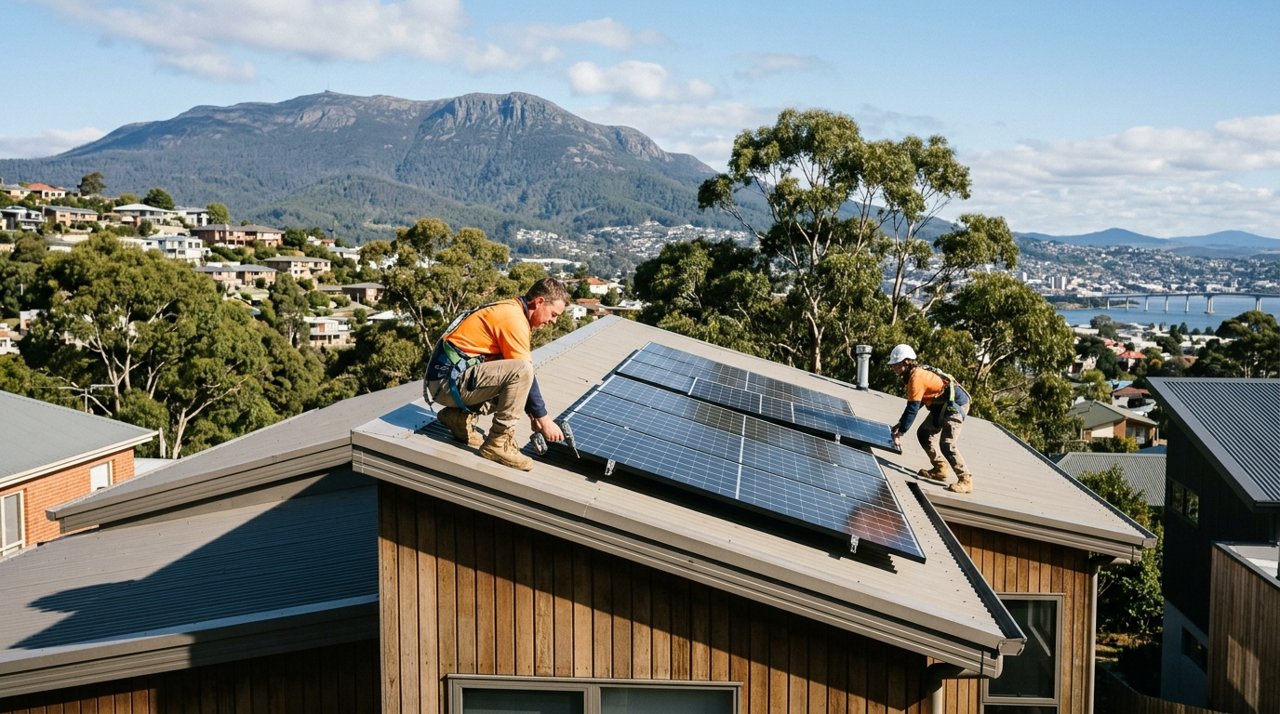
Yes, most Tasmanian roofs are great for solar. The ideal, textbook-perfect roof in Hobart or Launceston faces directly north with a pitch of around 30-38 degrees and has no shade. But in the real world, perfect is rare, and excellent results are still achievable with east or west-facing panels, or even a combination.
The key is that panels generate most of their power during the middle of the day. A north-facing roof captures the most intense midday sun, maximising total generation. However, east-facing panels are great for generating power early in the morning, just as your family wakes up and starts using appliances. West-facing panels are powerhouses in the late afternoon, perfect for running the air conditioner on a warm day or charging an EV after work. For many homes, a split east/west system is a smart way to spread generation across the whole day, which is fantastic for self-consumption.
What about roof direction and angle?
Your roof’s orientation (the direction it faces) and its pitch (the angle or steepness) determine how much direct sunlight your panels will receive throughout the day and year.
- North: This is the premium direction in the southern hemisphere. It provides the highest overall annual energy production, capturing the most sun year-round.
- East: Catches the morning sun. This is valuable for households that use a lot of power in the mornings for heating, hot water, and getting ready for the day.
- West: Catches the strong afternoon sun. This is ideal for covering energy use in the afternoons and early evenings, like cooking, cooling, and pre-heating your home for the night.
- South: In Tasmania, a south-facing roof is the least productive and is generally avoided for solar panels. The low angle of the winter sun means generation would be very poor.
Flat roofs are also excellent candidates. Panels can be mounted on tilted frames set to the optimal angle (around 30-38 degrees) and oriented directly north to maximise their output.
How much does shade affect my solar panels?
Shade is a significant factor and can reduce your system’s output more than you might think. Even a small amount of shade on one part of a panel can have a surprising impact on the whole system’s performance. Common sources of shade in Tasmanian suburbs include large gum trees, neighbours’ houses, chimneys, and antennas.
A good solar designer will conduct a thorough shade analysis of your roof for different times of the day and year. Modern solar technology offers solutions to minimise shade losses:
- Microinverters: Each panel gets its own small inverter, so a shaded panel doesn’t affect the output of the others.
- DC Optimisers: These devices are attached to each panel and work with a central string inverter to manage the performance of each panel individually.
While these technologies can add to the upfront cost, they can be a worthwhile investment if you have unavoidable shading issues, ensuring you get the most out of every panel.
What size solar system do I need in Tasmania?
For a typical Tasmanian home looking to future-proof for electrification, a system of around 13kW of panels paired with a 10kW inverter is becoming the new standard. This might sound large, but it’s designed to meet future needs, not just today’s.
Why so big? Because energy use is set to rise. Many households will soon have, or already have:
- An Electric Vehicle (EV)
- A heat pump for home heating and cooling
- A heat pump hot water system
- An induction cooktop
These efficient electric appliances will replace old gas or wood-fired ones, and your solar system needs to be ready to power them. TasNetworks rules allow for a 10kW inverter on a standard single-phase connection, which most Tasmanian homes have. By “oversizing” the panels to 13.3kW (the maximum 133% allowed), you generate more power on cloudy days and produce a fuller, flatter curve of energy during peak sun hours.
Of course, if you have a smaller home, very low electricity usage, and no plans to electrify, a smaller system like the once-common 6.6kW might still be a suitable choice.
Is a battery worth it in Tasmania?
A home battery can be a great addition, but it’s important to be realistic about the financial payback in Tasmania. With our relatively low retail electricity prices and a modest feed-in tariff (the amount you’re paid for exporting surplus solar), the payback period for a battery is typically longer than for solar panels alone, often in the 7-12 year range.
The main value of a battery for most Tasmanians on a standard tariff is:
- Maximising Self-Consumption: It stores your excess solar power generated during the day so you can use it at night, instead of buying electricity from the grid at a higher price.
- Backup Power: A battery can provide seamless power to essential circuits during a blackout, keeping your lights, fridge, and internet running.
From 1 July 2025, the federal Cheaper Home Batteries Program may be available to eligible households, potentially reducing the upfront cost of an approved battery system by around 30%. It’s important to note there are no separate Tasmanian government battery rebates.
For those on wholesale spot-price electricity plans, a battery’s value proposition can change. Automated software can charge the battery from the grid when wholesale prices are very low or even negative, and then use that stored energy to avoid drawing power when prices are high, creating another avenue for savings.
How do solar rebates work in Tasmania?
The main financial incentive for installing solar is the federal Small-scale Renewable Energy Scheme (SRES), often called the “solar rebate.” It’s not a cash-back offer but an upfront discount on the total cost of your system.
This scheme provides a number of Small-scale Technology Certificates (STCs) based on your system’s size and your location. Tasmania is in STC Zone 4. Your solar installer will claim these certificates on your behalf and apply the value as a point-of-sale discount, saving you the paperwork. This federal incentive significantly reduces the initial investment required. Eligibility depends on your specific circumstances and the system installed.
What’s the final takeaway?
For most Tasmanian homeowners, investing in solar is a smart financial decision that also contributes to a cleaner energy future. The key to a successful system is not just about having a north-facing roof, but about designing a system that matches your daily energy usage patterns. An east/west split can be just as valuable as a purely north-facing array for maximising how much of your own solar power you use directly.
Focus on self-consumption first, as this is where the real savings are found. A well-designed, future-proofed system of around 13kW will set your home up for the coming decades of electrification. While a battery’s payback is longer here than on the mainland, its value for energy independence and blackout protection is compelling for many families.
This guide was written by the local team at Solar Generation Tasmania. We’re always happy to help our fellow Tasmanians understand their solar options.
#solargentas #solargen #solargenerationtasmania
Published by Solar Generation Tasmania. General information current as at publication — rebates, tariffs and prices change, so confirm current figures before deciding.
Thinking about solar for your place?
Tell us a little about your home and a local Tasmanian installer will put together a free, no-obligation assessment — system, battery and the rebates you qualify for.
- Honest advice for Tasmanian conditions (Zone 4 sun, hydro grid)
- We apply every rebate you’re eligible for
- Local installers — not a mainland call centre
- SAA-accredited, with degree-qualified owners and 10+ years in tech & solar