
← Blog · 19 August 2026
Federal Battery Rebate Hits 500,000 Milestone as New Tasmanian Power Prices Take Effect
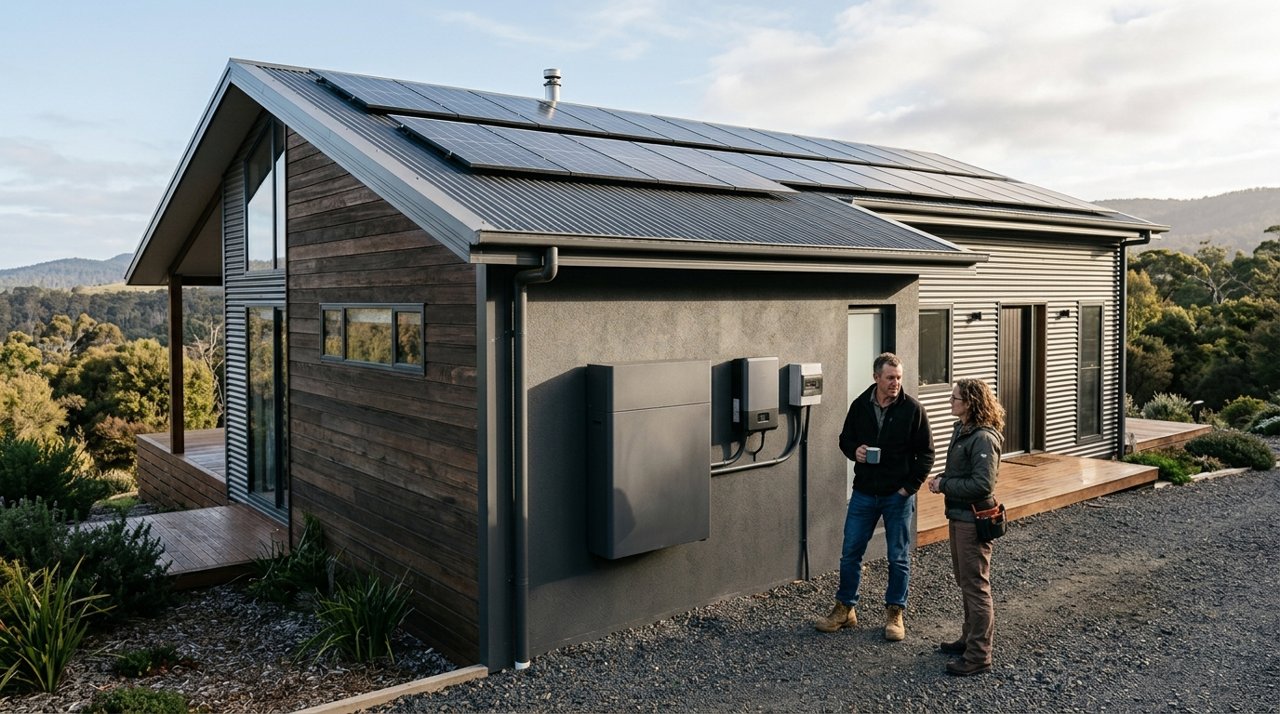
A major federal battery incentive has passed a significant milestone, while new electricity prices and solar feed-in rates for the 2026-27 financial year have kicked in across Tasmania. These developments, occurring in the past several weeks, change the financial landscape for homeowners considering investing in solar and battery storage.
National Battery Program Surpasses Half a Million Installs
In mid-August 2026, the federal Minister for Climate Change and Energy, Chris Bowen, announced that the Cheaper Home Batteries Program has now supported the installation of over 500,000 home batteries across Australia. The program, which launched in July 2025, provides an upfront discount on the cost of an eligible battery system when installed with a new or existing solar PV system.
The incentive is delivered through the Small-scale Renewable Energy Scheme (SRES), the same mechanism that provides the point-of-sale discount for solar panels. For a typical home battery, the discount is intended to cover roughly 30% of the cost. According to the government, the program has seen strong uptake in outer suburban and regional areas, significantly boosting the number of households able to store their cheap daytime solar power for use during evening peak times. For Tasmanians, this national program remains a key financial incentive that directly reduces the upfront cost of adding a battery to a solar system.
Tasmanian Electricity Prices and Solar Tariffs Updated
Closer to home, new regulated electricity prices and solar feed-in tariffs (FiTs) took effect on 1 July 2026. The Tasmanian Economic Regulator approved an average standing offer price increase for Aurora Energy residential and small business customers of 4.23%. The regulator stated this was driven primarily by an uplift in network costs.
At the same time, the minimum feed-in tariff—the rate solar owners are paid for surplus energy exported to the grid—increased by 5.6% to 9.276 cents per kilowatt-hour (c/kWh). The regulator noted this rise was due to higher wholesale electricity costs and other market participation costs.
The practical outcome for a Tasmanian solar homeowner is a widening gap between the cost of importing power from the grid and the revenue received for exporting it. This shift makes self-consuming solar power directly, or storing it in a battery for later use, more financially advantageous than selling it back to the grid.
Federal Solar Rebate Expanded for Larger Systems
On 5 August 2026, Minister Bowen also announced a significant expansion of the SRES for commercial-scale solar. From an expected start date of 1 October 2026, the eligibility cap for the upfront STC rebate will be lifted from 100 kilowatts (kW) to 1 megawatt (MW). While this change does not directly affect residential homeowners, it is a major federal policy shift that the government estimates will cut the upfront cost of a mid-sized commercial solar system by around 20%, signalling strong ongoing support for solar generation.
State Government and Grid Infrastructure Updates
On the policy front, the Tasmanian Government on 12 August 2026 tabled its response to an independent review of the state’s climate change legislation. The government, through Environment Minister Guy Barnett, supported all recommendations to strengthen governance and transparency around its climate actions. This is part of a broader push which includes developing legislation to establish Renewable Energy Zones (REZs) to coordinate and streamline the construction of new generation and transmission infrastructure.
This long-term planning is critical as the grid evolves. TasNetworks is continuing preparatory work on the North West Transmission Developments, a key project to support Project Marinus and connect new renewable generation. In August 2026, its construction partner was reported to be expanding its local operations in preparation for the project’s delivery.
For Tasmanians, these recent developments highlight a dual focus on national incentives for home energy storage and local price signals that encourage on-site energy use.
#solargentas #solargen #solargenerationtasmania
Published by Solar Generation Tasmania. General information current as at publication — rebates, tariffs and prices change, so confirm current figures before deciding.
Thinking about solar for your place?
Tell us a little about your home and a local Tasmanian installer will put together a free, no-obligation assessment — system, battery and the rebates you qualify for.
- Honest advice for Tasmanian conditions (Zone 4 sun, hydro grid)
- We apply every rebate you’re eligible for
- Local installers — not a mainland call centre
- SAA-accredited, with degree-qualified owners and 10+ years in tech & solar